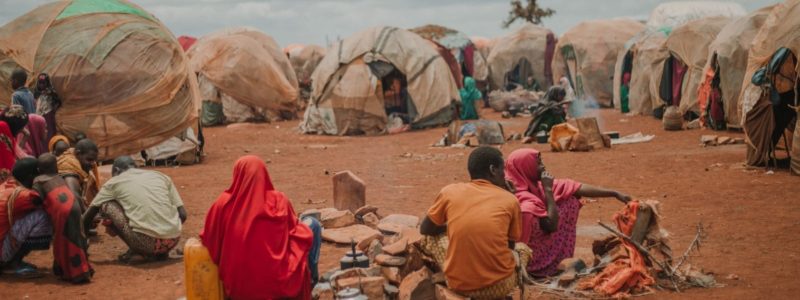
Displacement affects more than 120 million people worldwide, yet it is rarely a standalone event; it is the breaking point of a world under compounding pressure. In reality, displacement is often a process that unfolds over months or years, shaped by conflict, insecurity, political instability, and environmental pressures.
People may be forced to leave their homes for many reasons, affecting where and how they move. Some cross international borders and become refugees, while others remain within their own country as internally displaced people (IDPs). Although each situation is unique, displaced populations often face similar challenges: loss of income, disrupted education, reduced access to services, and uncertainty about what comes next.
The current displacement crisis in Colombia offers a clear example of how these pressures take hold. Similar patterns can be seen in conflict-driven displacement around the world. Understanding how these dynamics emerge and repeat can help donors respond more effectively and support solutions that extend beyond the initial emergency.
Different paths, shared vulnerabilities
The causes for displacement vary, but the challenges that follow often overlap. While legal status can improve access to protection, work authorization, and support services, it rarely resolves vulnerability on its own. In many host countries, large portions of the labor market are informal, limiting opportunities for stable employment even for those legally permitted to work.
While displacement is often described as a single event, it is more accurately understood as a crisis that compounds over time, even becoming an ongoing cycle. Violence or instability may force families to flee, but the risks do not disappear once they leave. In many contexts, the same armed actors or criminal networks that drive people from their homes later exploit the vulnerabilities it creates, targeting displaced populations for labor, recruitment, or extortion. Families may relocate multiple times as conflicts evolve, resources run out, or new threats emerge.
Families frequently settle in underserved areas where housing, services, and support systems are limited. These communities are also more likely to face environmental risks such as flooding, landslides, and extreme weather. For many families, this can lead to repeated or prolonged displacement as violence spreads, disasters strike, or livelihoods fail. Children are especially vulnerable throughout this cycle, facing interrupted education, heightened protection risks, and long-term emotional and psychological impacts that can make recovery and stability even harder to achieve.
Why local organizations matter
Displacement often unfolds in environments where conflict, insecurity, or limited government capacity make it difficult to reach affected populations. In these settings, nonprofit and community-based organizations are often the first, and sometimes the only, actors able to respond. Communities frequently turn to local organizations first during crises, and their local knowledge, trusted relationships, and ability to adapt make them essential partners in both emergency response and long-term recovery.

Image from iCare Thailand Foundation
CAF America’s recent research found that nearly 9 in 10 organizations have responded to at least one disaster or crisis in the past five years, and more than 75% report responding regularly. Many described being pulled beyond their original missions to address overlapping needs, from food and shelter to protection and mental health services. At the same time, many organizations report challenges securing the long-term, flexible funding needed to sustain their work as needs continue to evolve.
Without sustained intervention, this dynamic can become a self‑perpetuating cycle for families and the systems meant to support them.
How donors can help break the cycle
Crises that force families from their homes create urgent, visible needs. Food, clean water, health services, and hygiene support remain essential. However, if displacement is a cycle, response alone is not enough. There are meaningful opportunities to reduce harm and prevent repeated displacement by investing earlier and more strategically.

Several critical needs consistently emerged in our research:
- Child protection, especially against recruitment, exploitation, and abuse.
- Livelihood and financial stability support that helps families avoid unsafe or illicit work.
- Resilient housing solutions, including safer construction and access to basic utilities.
- Legal and administrative support, particularly for refugees navigating regularization processes.
- Peacebuilding and violence prevention efforts that address the root causes of displacement.
CAF America’s recent disaster and crisis research revealed a common challenge: organizations often struggle to secure the flexible funding needed to adapt as conditions change. Respondents highlighted the importance of support for operational costs, including staffing, logistics, and preparedness. Unrestricted and multi-year funding helps organizations plan ahead and respond more effectively as needs evolve.
For donors looking to support trusted organizations responding to displacement and other humanitarian emergencies, CAF America’s Global Relief Navigator highlights active relief efforts around the world. Through grantmaking support, cross-border giving solutions, and other philanthropic services, CAF America helps donors support both immediate relief and long-term resilience. Strategic philanthropy does more than respond to today’s crisis. It can help strengthen communities and reduce the risk of repeated displacement in the future.
About Our Research
CAF America’s findings referenced throughout this article come from recent research examining how charities respond to disasters and crises globally. The study included 549 charitable organizations across 40 countries and explored how nonprofits are responding to increasingly frequent and interconnected humanitarian challenges.