*Acknowledgements: This article incorporates field insights and organizational briefings provided directly by Save the Children Colombia and Mercy Corps.
In January 2025, a truce unraveled between armed groups in northeastern Colombia. Along the Venezuelan border, the Catatumbo region experienced a sharp spike in violence as political and criminal groups fought over territory, displacing more than 56,000 people in under two months. According to insights shared with us from Mercy Corps, our charity partner, more than 160,000 people were displaced in 2025 alone.
But this was not the beginning of the crisis – it was another surge in a much longer story.
Colombia is already home to more than 7 million internally displaced people and nearly 3 million refugees from Venezuela. Many families have been uprooted multiple times, moving between rural areas, cities, and across borders in search of safety.
In places like Catatumbo, families who had already fled violence were displaced again — often without permanent housing or access to stable jobs and services — leaving them vulnerable to the same groups that drove them from their homes. Today, many still face harm in the crossfire or coercion into illicit economies under threat of violence.
Efforts to stabilize these regions are complicated by the nature of the conflict. While some armed groups are included in peace processes, others operate outside them or have splintered into smaller factions. Although the government distinguishes between “political” insurgencies and “criminal” groups, that categorization means little to those facing violence, extortion, and forced recruitment. As factions splinter from national negotiations, fewer communities are reached by stabilizing efforts, leaving families caught in a patchwork of shifting conflicts.
This crisis is bigger, faster-moving, and more complex than most donors realize.
Life After Displacement
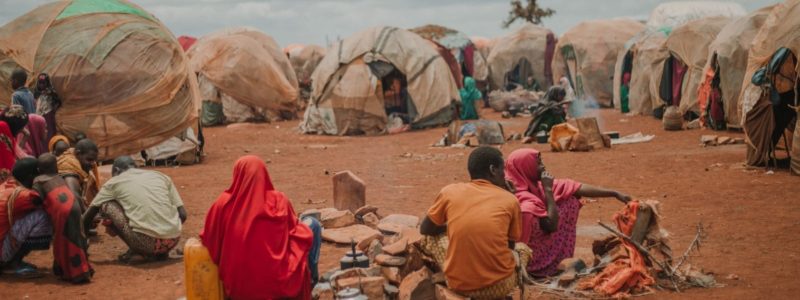
When families finally reach the safety of a city, they often find that the struggle for survival has simply entered a new phase. Displaced people often relocate to informal settlements in or near urban areas, where housing is precarious and basic services are limited. Since this land is often the only available option, communities are pushed into areas vulnerable to landslides, floods, and other environmental hazards.
In Soacha, just outside Bogotá, residents are working with local authorities to legalize their homes and integrate electricity, water, and sanitation systems. Yet for many, opportunities remain scarce. Livelihoods are often informal, and access to education, healthcare, and stable income is limited. Nearly half of Colombia’s labor market operates informally, meaning that even those with legal status often struggle to find secure opportunity. While Colombia’s government has attempted to provide refugees with formal paths for economic integration, the lack of formal jobs leaves both refugees and internally displaced citizens in similar circumstances.
This lack of formal opportunities creates a dangerous vacuum that armed groups are quick to fill – but at a heavy price, including extortion, child recruitment, and forced participation in illicit work such as the drug trade or illegal mining. As a result, many families find themselves facing new risks in the places they hoped would offer protection. Displacement doesn’t end when families flee – it often gets worse.
Children at the Center of the Crisis
This cycle of recurring vulnerability is most evident in its impact on children. In Catatumbo alone, last year’s wave of violence affected more than 85,000 displaced people; earlier this year, another 11,000 were displaced by flooding. In both cases, children bear a disproportionate share of the burden. Displacement disrupts nearly every aspect of a child’s life, from education to safety to long-term well-being.

Image from Mercy Corps
According to our charity partner Save the Children Colombia, more than 46,000 children and adolescents have had their schooling interrupted due to violence, school closures, and fear of recruitment by armed groups. Once displaced, many children move into environments with limited protection, increasing the risk of exploitation, school dropout, and continued exposure to violence. The Colombian Truth Commission warns that a late and insufficient response turns a temporary emergency into protracted displacement. This delay deepens structural inequalities and increases the risk that children will face family separation, accelerated impoverishment, and educational disruption. Families who sought refuge in urban areas have, in many cases, been pursued again by armed groups in host communities.
Still, the scale of need remains immense. Children are caught in the crossfire – and they’re often the least protected.
How Communities Are Responding
Amid these challenges, local organizations are working to bridge the gap between immediate aid and long-term security. Save the Children shared that Madres del Catatumbo, a network of displaced women, has helped rescue 420 children in northern Colombia who were at risk of recruitment by armed groups – a powerful example of how community-led action can create pathways to safety.
Organizations like Save the Children are helping coordinate responses between local governments and communities, linking immediate humanitarian assistance, such as school materials and emergency support, with longer-term investments in education, child protection, and psychosocial services. These coordinated approaches aim not only to respond to urgent needs, but to address the structural conditions that allow displacement to persist.
Partnerships with grassroots networks are central to this effort. Collaborations with groups like these enable organizations to identify vulnerabilities early, respond quickly, and strengthen community-led protection systems.

Image from Mercy Corps
At the same time, organizations like Mercy Corps support families from their first steps in Colombia through long-term integration, providing access to food, healthcare, and psychosocial support, while also helping individuals regularize their status and build pathways to stable livelihoods.
Together, these efforts demonstrate what is possible when local expertise, community leadership, and sustained support come together, but demand continues to grow faster than resources.
Local leadership and NGOs are helping to break the cycle, but they need support to scale their impact.
What Comes Next
The crisis in Colombia shows that displacement is not a one-time event, but a cumulative process. Immediate needs — including food, water, healthcare, and hygiene — remain critical, alongside longer-term efforts to strengthen livelihoods, improve housing, and expand access to education and legal protection. Children remain at the center of this work, requiring urgent protection from recruitment, violence, and disruption to their development.
At the same time, communities are not standing still. Local leaders and nonprofit organizations are helping families rebuild stability, prevent further harm, and create pathways toward recovery — often in the most challenging conditions. What these efforts consistently lack is not urgency, but a chance to be flexible. Without sustained, multi-year support, organizations are forced to react to crises rather than prepare for them, limiting their ability to reach more families before risks escalate.
Colombia is a powerful example of both the challenges of displacement and the resilience of the communities responding to it. CAF America works with charities across the globe providing aid for communities in need, including organizations actively helping through the Colombian displacement crisis. The Global Relief Navigator offers a broader view of similar crises — and the people responding to them — around the world.
For more information on how to give safely and effectively in Colombia, visit CAF America’s Global Relief Navigator to explore eligible grantees, learn about ongoing humanitarian efforts, and discover ways to give.