
Across Mexico, droughts have parched the soil and increasing economic pressures have pushed families toward emigration, leaving their homes in search of more stable conditions. Just last year, 90% of the country experienced some level of drought, and Mexico City’s water reservoirs reached a critically low level, with capacity dropping to 39%. States in northern and central Mexico, including the mountain regions where rural communities depend heavily on local water sources, are among the most affected. The prolonged dry seasons combined with depleting water sources has had devastating effects on agricultural livelihoods, local economies, and the very survival of generations-long homes.
Amid these harsh realities, one organization is fighting to keep rural communities rooted in their ancestral lands. El Maíz Más Pequeño A.C. transforms schools into hubs of climate adaptation, and is sparking an educational revolution grounded in local communities’ needs. For over 15 years, their influence has grown, reaching rural and Indigenous communities with adaptive governance principles that promote sustainable farming and food systems and collaboration between residents and local governance.
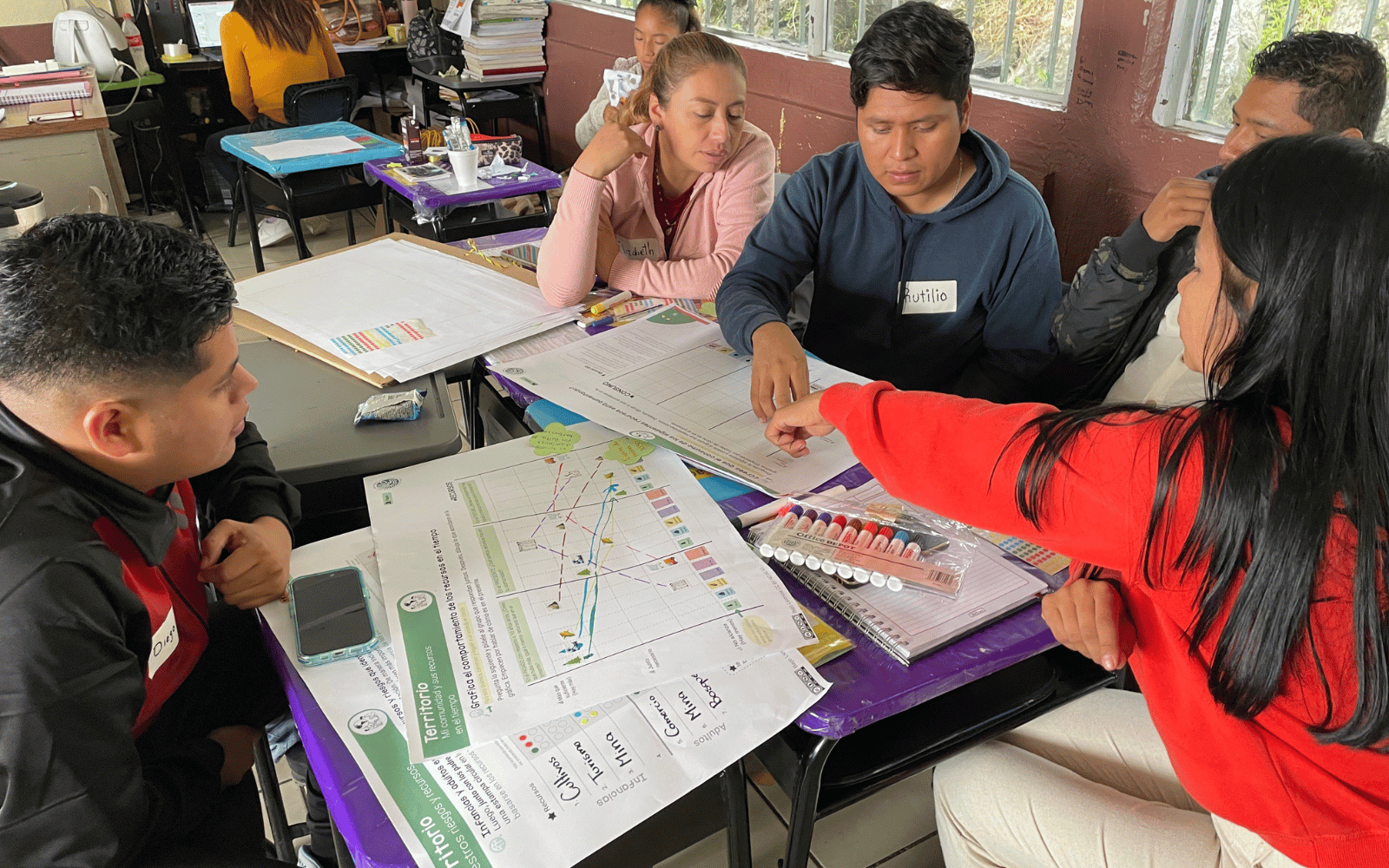
El Maíz Más Pequeño’s vision comes to life through their flagship strategy called the Learning and Transition Laboratory for Climate Change Adaptation (labAT). labAT begins with a simple idea: teachers must deeply understand the realities of their own local landscape in order to prepare children for an uncertain climate future. To teach adaptation, El Maíz Más Pequeño starts with identifying local resources — family, food and water, household economies, and values. labAT trains teachers how to gather this local information efficiently, using a classroom-based community diagnostic process that turns schools into listening posts.
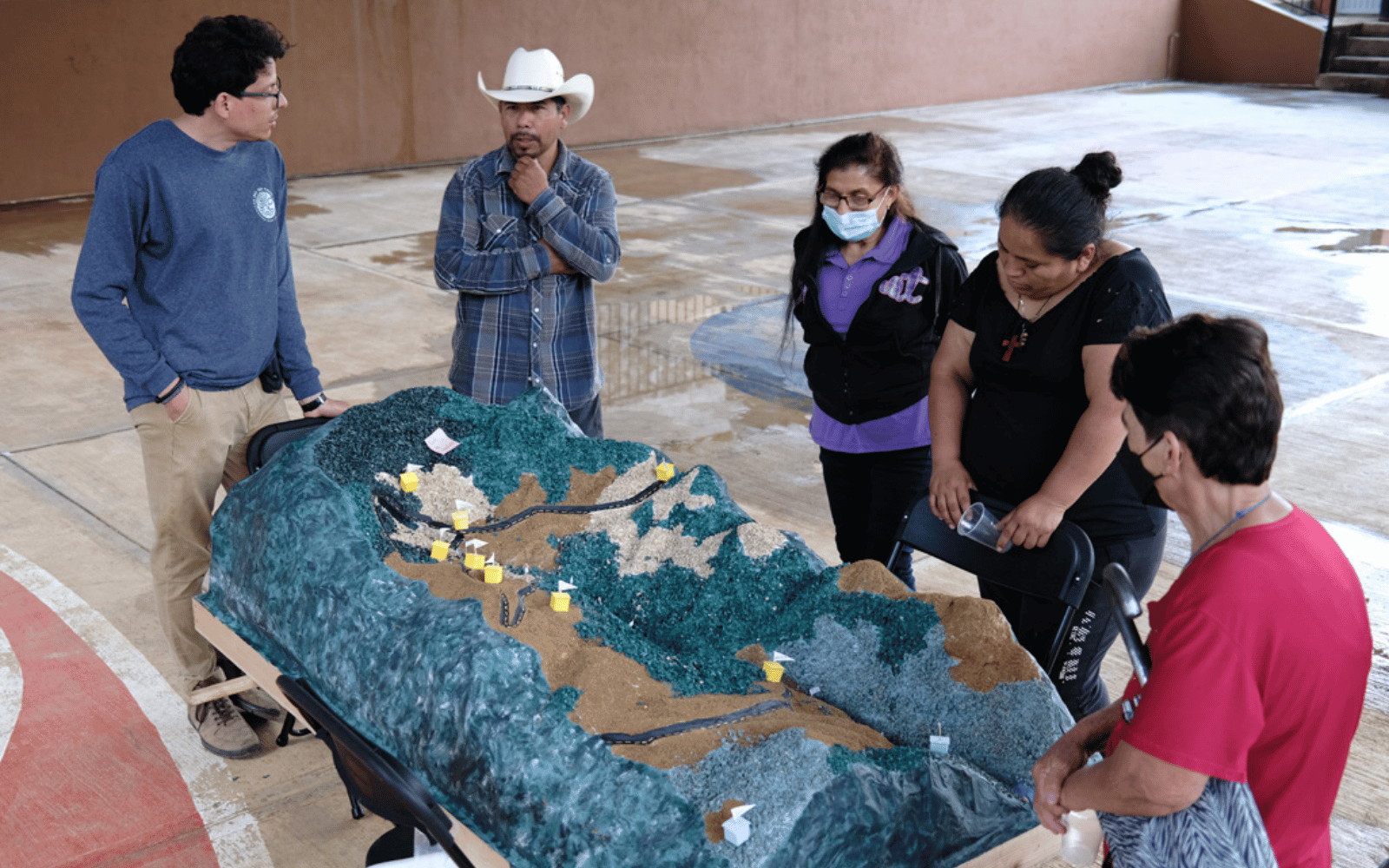
During labAT sessions, classrooms become collaborative mapping and problem-solving spaces where students, teachers, and families carefully study their own community. Students start by sketching their surroundings and marking places they see as safe, useful, or risky. As they add details — like new mosquito habitats at unusually high elevations or areas prone to forest fires — they begin to recognize how climate change is reshaping daily life. With this shared understanding, teachers are able to weave locally relevant climate content into lesson plans, exploring how vulnerabilities and strengths show up in households, the surrounding territory, and regional governance. As a result, labAT sessions help the community strengthen climate literacy and the habit of together to build out their shared vision for the future.
“Young people deserve to understand the landscape their future depends on — and to prepare themselves to play the lead role in its continued management.”
–Henry Miller, El Maíz Más Pequeño Director and Co-Founder
El Maíz Más Pequeño has transformed climate education outcomes in Mexico in powerful ways: teachers trained through labAT saw their confidence in developing school projects based upon localized information rise, with mastery of key climate concepts jumping from less than 30% to 94%. In the most recent phase, 44 teachers brought labAT to their classroom, reaching 1,470 students, and 655 mothers and fathers in 26 rural communities of Querétaro’s Sierra Gorda – proving that a classroom can become a catalyst for community transformation in the face of environmental urgency.
The programs offered through El Maíz Más Pequeño have also been formally recognized by the the state authority responsible for basic education in Querétaro (USEBEQ), and the Secretariat of Sustainable Development (SEDESU), Government of the State of Querétaro. With this support, El Maíz Más Pequeño aims to digitize their educational programs so it can be more widely replicated – from basic education through high school – across the state and in other regions heavily affected by the impacts of climate change. This transformation will scale their innovative climate education model and engage more communities, all while continuing to empower young people and communities to build resilient, sustainable futures rooted in their own homes.
This progress is made possible through the generosity of donors committed to advancing local leadership and global sustainability. During our partnership, we have facilitated over $220,000 in grants to support the work of El Maíz Más Pequeño through donor advised gifts from private donors and foundations. A donor advised gift (DAG) allows U.S. donors to make a secure one-time contribution to a charitable project or organization abroad. Whether a single gift or a part of ongoing philanthropic support, these DAGs enable El Maíz Más Pequeño to expand its climate education model to more schools and communities.
Each act of generosity is an expression of trust and shared purpose, and together, these gifts create an impact greater than they could achieve on their own. Through CAF America’s giving process, every donor advised gift strengthens El Maíz Más Pequeño’s vital work and reaffirms a timeless truth: when we connect innovative ideas and resources, meaningful change can take root and grow far beyond expectations.
Learn more about making a donation via a Donor Advised Gift (DAG).
Explore more giving insights and Stories of Impact.