Mosaic Middle East
Mosaic Middle East seeks to improve lives of persecuted minorities who are looking to rebuild their communities in a fragile, post-conflict context. At Mosaic Middle East we believe that we can all have an eternal hope for the future, but also that we are driven by our Christian compassion to be bringers of hope here on earth, in this time. This means that we do not look at the plight of those affected by poverty and conflict as an inevitability but instead seek to listen to their hopes for their own future and partner with them to bring about change.
Our work is shaped by both historic conflict and ongoing instability in the Middle East. We seek to promote peace and reconciliation by acknowledging its importance in all our programmes and projects. This means that we actively pursue activities which bridge barriers – political, religious, ethnic, socio-economic – and contribute to sustainable peace in the region. Mosaic Middle East seeks to challenge dominant narratives of exclusion by paying particular attention to promoting the voices and agency of vulnerable minorities. In all our activities we strive to shift the traditional balance of power and challenge systemic and structural causes of poverty.
Projects:
Peace and Reconciliation: Promoting sustainable peace is an integral part of all our projects and programmes. This means that we actively pursue equal access for all and seek to find opportunities to build community between participants from different backgrounds.
Refugees: Forced displacement causes immense human suffering: trauma, loss, poverty, destruction of normal patterns of living, worsened economic status, and separation of families. Facing protracted exile, many refugees face problems of chronic stress, poor health, and hopelessness.
Women’s Empowerment: We know that women are disproportionately affected by conflict. Women and girls are more likely to experience gender-based violence; be subjected to forced or early marriage; suffer disrupted or curtailed education; and take on unpaid care work. Additionally, conflict results in an increase in the number of female-headed households. These factors combine create barriers to economic empowerment such as: a lack of educational credentials; caring responsibilities which limit availability for employment; and the reinforcement of cultural norms about the place of women being within the home.
Education: Around the world, the number of children missing out on an education because of armed conflicts, forced displacement, and protracted crises is increasing dramatically. Mosaic Middle East works to ensure that crisis-affected children receive education that enables them to acquire holistic learning outcomes and improves their wellbeing.
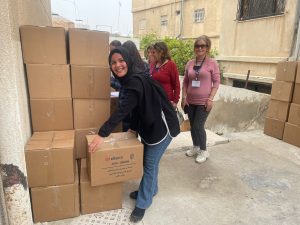
Humanitarian Aid: At Mosaic Middle East, we know that in order to access our education, livelihoods, and empowerment programmes, people need to have their basic needs met. This is why our projects include humanitarian aid – such as food relief – so as to ensure that involvement in our programmes is inclusive and sustainable.